







Last Updated on January 15, 2026 by Jacqualyn
Snake bites can be deadly. Every year, venomous snake bites in the United States affect 7,000–8,000 people. While only a handful of cases end in death, each bite carries the risk of pain, long recovery, and lasting consequences. For me, the numbers became very real one warm Texas evening at Richland Chambers Lake when a baby copperhead snake changed my life forever.
This is not just a medical story — it is about fear, the unexpected, and the lessons that come from adversity. I share it because knowledge saves lives, and because the scars I carry are balanced by the wisdom I gained.
At-A-Glance
Lesson 1: Snake Bites Happen When You Least Expect Them

It was August 2004, only a few months after our dream home at the lake was complete. Andy and I had both flown in from business trips, reunited at the house, and settled into a Texas-style evening of barbecue and wine on the back porch. Life felt peaceful and steady — the kind of night where nothing could possibly go wrong.
After dinner, I suggested we walk down to the boathouse to check the new water line construction. Andy agreed but warned me to put on real shoes. Instead, I slipped on flip-flops and off we went. That choice, small as it seemed, became my first painful lesson.
The path followed a freshly trenched line down to the boathouse. Halfway there, I stumbled slightly. It felt like a thorn prick, sharp but forgettable. At the dock, though, my foot throbbed. What seemed like a scratch was actually a fang puncture — and in that unguarded moment, my evening turned into an emergency.
Lesson 2: Symptoms Can Be Deceptive
At first, there was only a single puncture wound. I assumed a splinter, a stick, maybe an insect sting — certainly not a snake. I didn’t even consider it, because I had expected two clear fang marks.
Andy shined a light and examined my foot. Calmly, he suggested we head back and clean the wound. His steady voice kept me from panicking. In hindsight, his calmness bought me precious time. He even offered to carry me back uphill to slow my circulation — I looked at him like he had five eyes, but now I understand exactly why he wanted to.
By the time we started the drive to the hospital, the pain was unbearable. What began as a prick became throbbing, pulsing waves. I still didn’t think “snake bite.” Denial doesn’t stop reality, though — venom was already spreading through my body. These were classic copperhead snake bite symptoms — pain, swelling, and nausea — though at the time I didn’t recognize them.
Lesson 3: Stay Calm, Get Help Fast

The rural hospital was twenty miles away, and by the time we arrived I was violently sick, vomiting from the venom. At check-in, Andy finally said the words he had been holding back: “My wife was bitten by a snake.”
Those words hit me like a hammer. Fear set in, but clarity came too — this was serious.
The local staff did what they could but quickly arranged for transfer. My options were Parkland Hospital in Dallas or Baptist in Waco. Friday night at Parkland meant chaos; I knew I wouldn’t make it. We chose Waco.
The ambulance ride was surreal. Four paramedics tracked my vitals and watched the swelling move visibly up my leg, like a dark current spreading. I was very sick, but they kept me calm. Their steadiness mattered as much as the medical monitoring.
There are old myths about cutting into the bite or sucking out venom. Those are not just outdated — they’re dangerous. The only correct first aid for snake bites is to call 911, stay calm, keep the bite below the heart, and seek medical care immediately. Andy’s calm actions gave me my best chance.
Lesson 4: Medical Expertise Matters
At Baptist Hospital in Waco, luck finally met me halfway. The doctor on call was a veteran of the Sweetwater Rattlesnake Roundup and had years of hands-on experience with venomous bites. If anyone knew what to do, it was him.
He examined the wound and quickly ruled out rattlesnake. His conclusion was chilling: it was most likely a baby copperhead. Young snakes often inject more venom than adults because they lack control. In my case, only one fang punctured — but it was a full dose. He told me directly: “Thank God only one fang got you. If both had, you might not be here to tell the story.”
Because the snake wasn’t captured, I couldn’t receive anti-venom. The risk of the wrong dose was too high. My only treatment was time, pain management, and close monitoring. Four days in the hospital, then weeks in bed at home. The pain was relentless. The swelling grotesque. I questioned if I’d ever walk comfortably again. But slowly, I healed.
Lesson 5: Small Choices Can Save Your Life From Snake Bites
One of the smartest things I did was remove my gold toe ring immediately after the bite. It might sound small, but as swelling set in, the ring could have cut off circulation and caused permanent damage.
It’s incredible how tiny choices add up. Flip-flops left me exposed. Jewelry could have worsened the wound. The absence of a flashlight hid the danger until it was too late. Each decision — careless or careful — shaped the outcome.
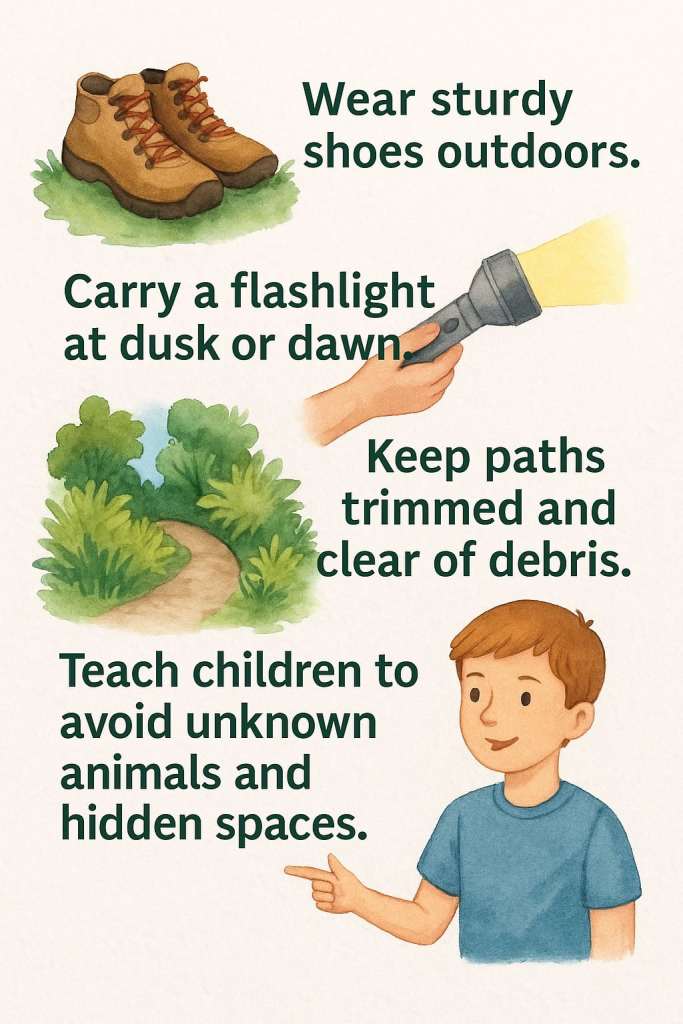
Prevention isn’t complicated:
- Wear sturdy shoes outdoors.
- Carry a flashlight at dusk or dawn.
- Keep paths trimmed and clear of debris.
- Teach children to avoid unknown animals and hidden spaces.
Simple choices can separate a safe evening from a medical emergency.
Lesson 6: Recovery Is Long — But Possible
Healing didn’t end when I walked out of the hospital. For weeks, I was bedridden. My leg swelled, my skin darkened, and the pain tested every ounce of endurance. It looked like gangrene. I wondered if it would ever return to normal.
But slowly, my body fought back. Rest, patience, and care carried me through. That season forced me to slow down, to appreciate health more deeply. It reshaped how I saw wellness — not as something we maintain when convenient, but as something we protect fiercely because life can change in an instant.
For me, it became a story of overcoming adversity after a snake bite, finding resilience in the middle of pain and uncertainty.
Lesson 7: Every Scare Holds a Silver Lining
The night I was bitten was one of the scariest of my life. But it taught me lessons I would never trade. I learned that calmness can save your life. I learned that prevention is worth more than regret. And I learned that even painful, terrifying moments carry wisdom.
The silver lining for me was survival — but also gratitude. I walked away with a renewed commitment to health, safety, and sharing what I’ve learned so others can avoid my mistakes. Every scar tells a story. This one tells me I am stronger than I realized.
Conclusion: Why I Share This Story about Snake Bites & The Importance of First Aid for Snake Bites
Snake bites may only claim a few lives each year in America, but for those of us who survive them, the scars are permanent reminders. My story shows how quickly danger can strike — during something as ordinary as a walk to the boathouse.
Awareness and preparation save lives. Wellness is not only about food and fitness; it’s about knowledge, resilience, and readiness for the unexpected.
If you’ve faced your own “snake bite” moment — literal or symbolic — I invite you to share it in our Thrive Community. Together, we can turn pain into power, fear into wisdom, and scars into strength.
Stay safe, stay aware, and remember: the moments that terrify us often reveal the strength we never knew we had.
Q1: What should you do if you are bitten by a snake?
Stay calm and call 911 immediately. Keep the bite below the level of your heart, limit movement, and remove any tight clothing or jewelry near the bite. Do not cut the wound, apply ice, or try to suck out the venom — those methods are dangerous and outdated. Seek professional medical care as quickly as possible.
Q2: How can you tell if a snake bite is venomous?
Venomous bites often cause intense pain, swelling, and bruising that spread quickly from the bite site. Some victims may experience nausea, vomiting, dizziness, or difficulty breathing. However, symptoms vary depending on the snake and the amount of venom injected, so always treat any snake bite as potentially serious and get medical help right away.
Q3: What are the best ways to prevent snake bites?
Wear sturdy shoes and long pants when walking in areas where snakes may be present. Use a flashlight outdoors at dusk or dawn. Keep yards, trails, and paths trimmed so snakes have fewer hiding spots. Never reach into dark holes, tall grass, or woodpiles with bare hands. Awareness and prevention are the best protection.
